The short answer
Keep the bottom track clear, lubricate the pivots and runners a few times a year with a light dry lubricant, and have the grille serviced every six to twelve months depending on use. Most stiff grilles are caused by dirt in the track.
What can I do myself?
- Vacuum or brush the bottom track regularly
- Wipe the bars with a damp cloth and mild detergent
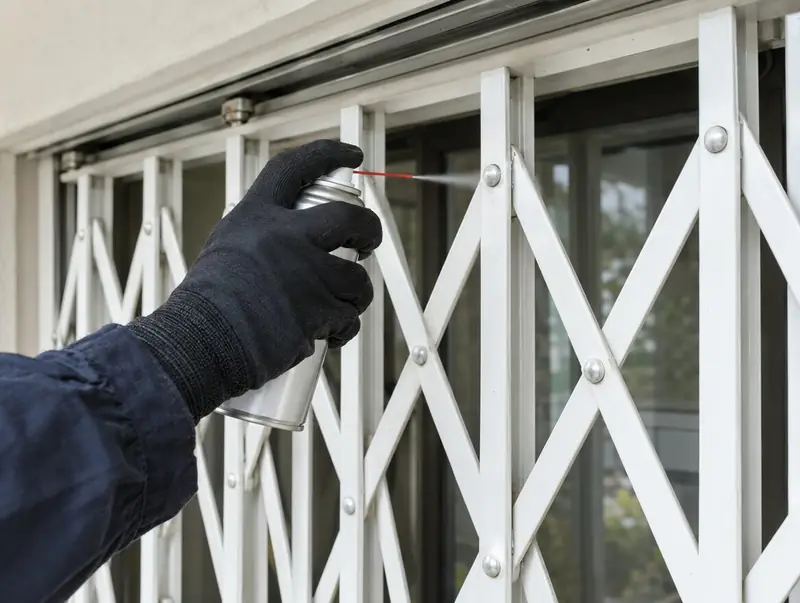
- Lubricate pivots, runners and the lock with a light dry lubricant
- Avoid heavy grease, which collects grit
- Close the grille fully and squarely so it does not twist
What are the warning signs?
- The grille drags or needs force to slide
- It jumps out of the track
- The lock is stiff or will not engage
- Bars or links are bent
- Rust spots on external grilles
How often should it be serviced?
Yearly for light-use internal grilles; every six months for shop grilles used daily, external grilles and electric roller grilles.
Is it worth repairing an old grille?
If the frame is sound, usually yes: wheels, links, tracks and locks can all be replaced. Heavily corroded or badly bent grilles are often better replaced.
This guide is general information, not legal advice. Rules differ between England, Wales, Scotland and Northern Ireland; check with your council, building control or insurer where it matters.
Add Security Grilles UK as a preferred source on Google
Related grilles
Planned maintenance: cleaning, lubricating, adjusting and checking grilles so they keep working smoothly.
from £114 per grille inc VAT, min. visit £174Learn moreRepairs for stiff, jammed, bent, off-track or broken grilles, including wheels, tracks and links.
visits from £174 inc VATLearn moreNew cylinders, lock boxes, quick-release locks and keyed-alike suites for existing grilles.
from £150 per lock inc VATLearn moreConcertina lattice grilles that slide across a window or door and fold neatly away when not needed.
from £414 inc VATLearn more